Essay · 7 minutes · from the Homeric Hymn to Demeter

Persephone was picking flowers when the ground opened. She came back up when the flowers did.

Persephone

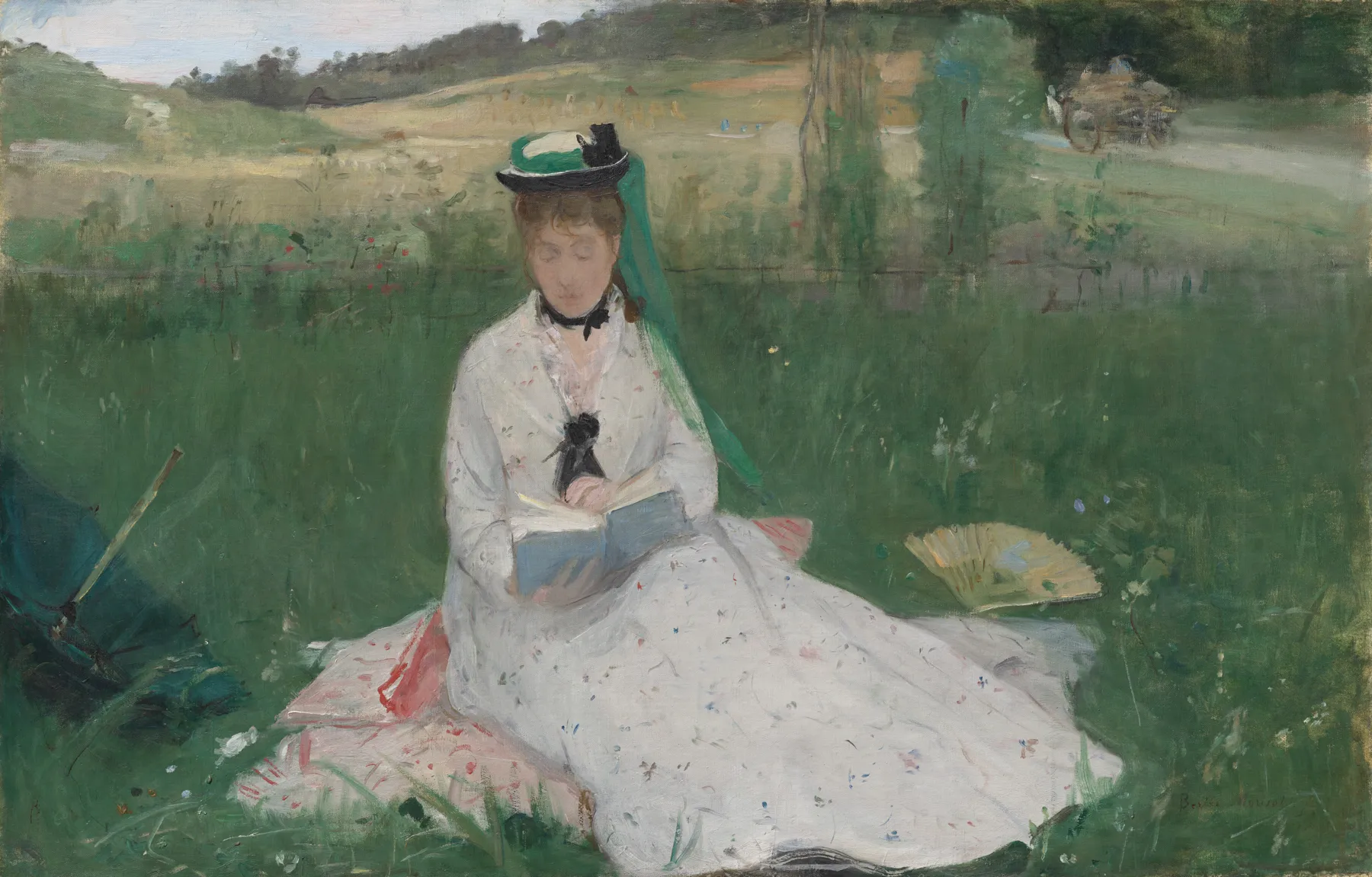
A young woman in a white dress sits reading in a green meadow, a fan and a parasol beside her.
Reading · Berthe Morisot, 1873 · Cleveland Museum of Art 1950.89

I. The meadowShe was out in a meadow with her friends, picking flowers.

Then she saw a narcissus with a hundred blooms on one stem.

She reached for it with both hands. The ground opened.

The meadow

She was out in a meadow with her friends, picking flowers: roses, crocuses, violets, irises, hyacinths. Then she saw a narcissus with a hundred blooms on one stem. The Earth had grown it there on purpose, as a trap. It smelled so sweet that, in the old song, the whole sky laughed.

Persephone reached for it with both hands. The ground opened under her. Hades came up out of it with his immortal horses. He pulled her into his golden chariot and drove her down under the earth.

She screamed for her father. Only two heard her: Hekate, in her cave, and the Sun, up in the sky.

Homeric Hymn to Demeter 4–20, 22–26.
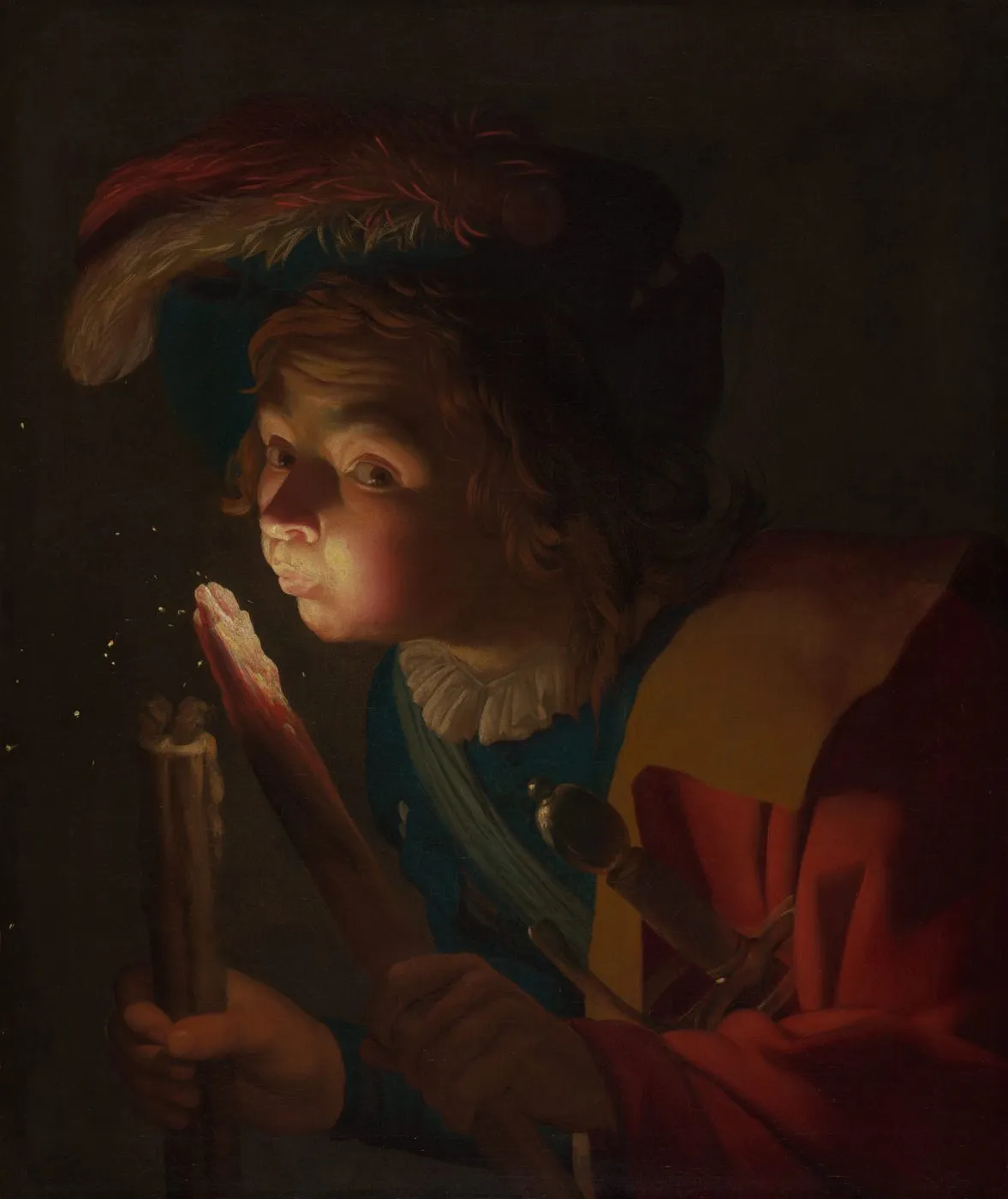
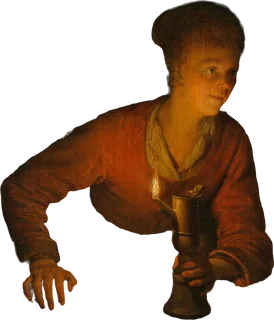
A boy in a feathered hat blows on a burning stick; the flame lights his face in the dark.
A Boy Blowing on a Firebrand · Gerrit van Honthorst, 1621–22 · Art Institute of Chicago 2018.135

II. The torchesHer mother looked for her for nine days, with burning torches in her hands.

On the tenth morning, Hekate came down the road with a torch of her own.

The torches

Her mother heard the echo in the mountains. Demeter, the goddess of grain, looked for her daughter for nine days, with burning torches in her hands. She didn’t eat and she didn’t wash. On the tenth morning Hekate came down the road with a torch of her own, and the two of them went to ask the Sun. He told them the truth. Zeus had given the girl to his brother Hades, against her will and against her mother’s.

Homeric Hymn to Demeter 38–63, 74–87.

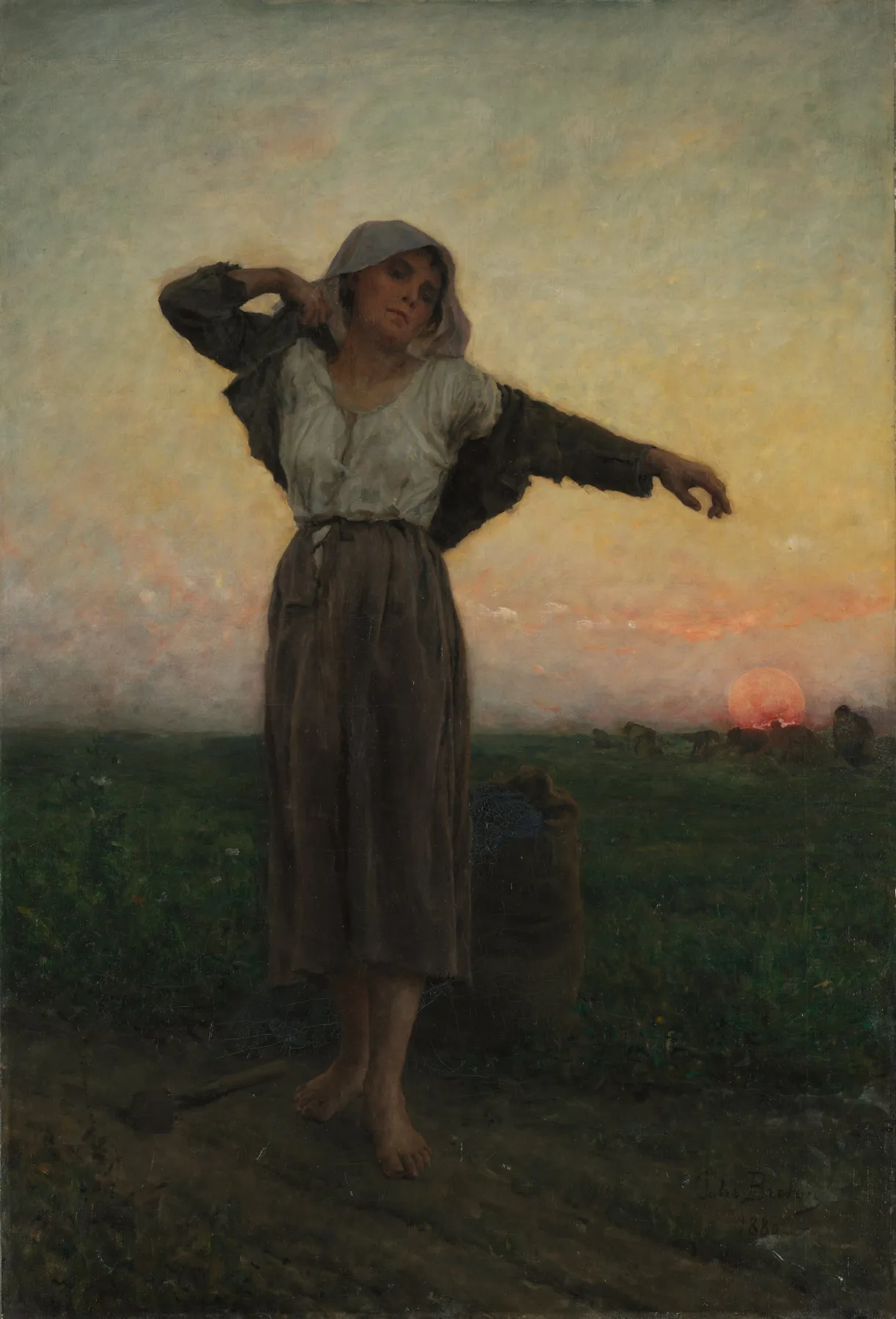
A young woman stands alone in an empty field at sunset, stretching, her work done.
The Tired Gleaner · Jules Breton, 1880 · Cleveland Museum of Art 1915.721

III. The empty fieldsSo Demeter walked away from the gods.

For a whole year she kept the seed hidden in the ground. Nothing came up.

The empty fields

So Demeter walked away from the gods. She made herself look like an old woman and sat down by a well in a town called Eleusis. She wouldn’t smile. In the house that took her in, a woman called Iambe kept making jokes until she did.

Then the fields stopped growing. For a whole year Demeter kept the seed hidden in the ground. Oxen pulled the ploughs, and the barley didn’t come up. The gods came to her one after another with beautiful gifts, and one after another she sent them away. She wanted one thing: to see her daughter with her own eyes.

Homeric Hymn to Demeter 90–104, 192–205, 305–333.

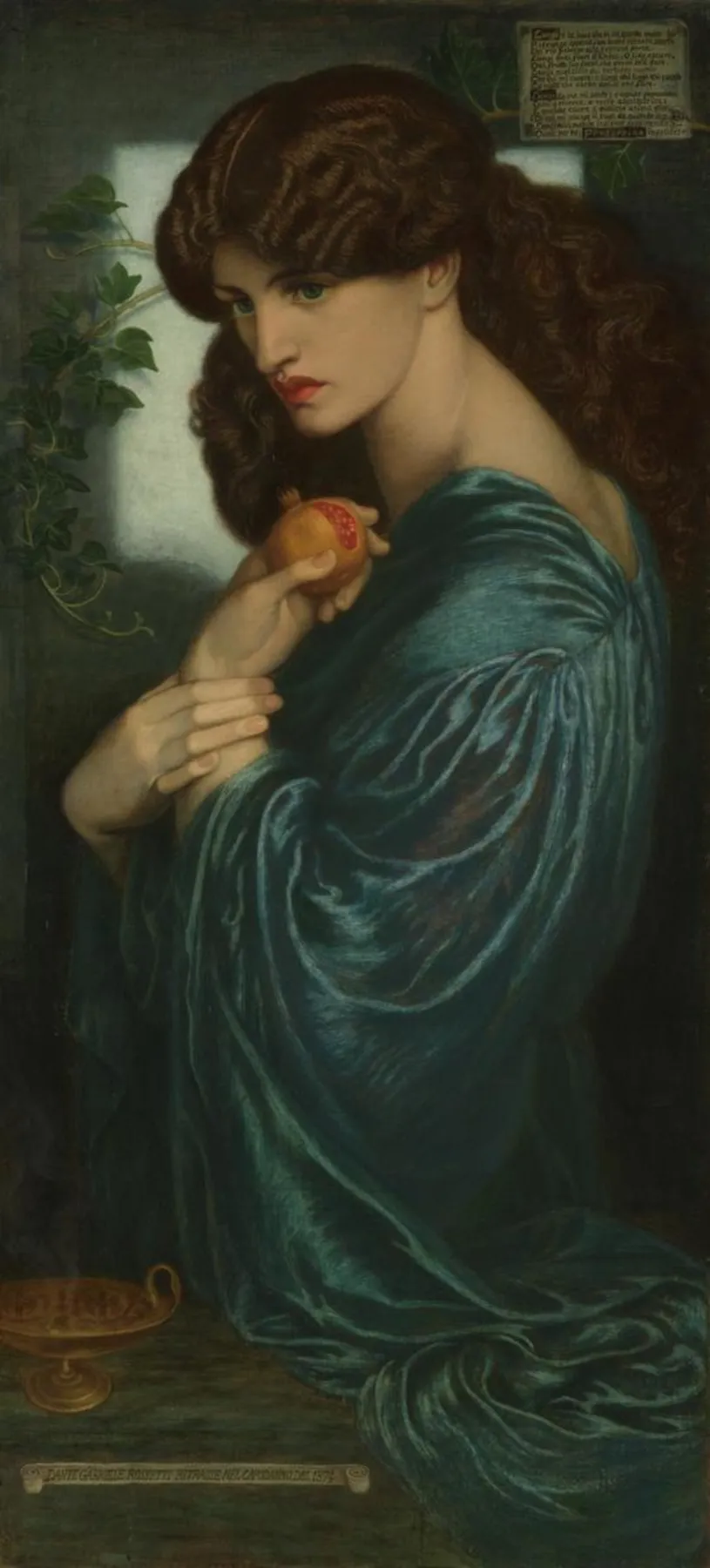
A woman in a dark blue-green dress holds a bitten pomegranate to her chest.
Proserpine · Dante Gabriel Rossetti, 1874 · Tate N05064

IV. The seedZeus sent Hermes down to fetch her.

Before she left, Hades slipped a pomegranate seed into her mouth.

One seed.

The seed

So Zeus sent Hermes down to fetch her. He found Persephone sitting beside Hades, unhappy and missing her mother. When she heard she could go, she jumped up for joy. Before she left, Hades slipped a pomegranate seed into her mouth.

Homeric Hymn to Demeter 334–374, 411–413.

Pomegranate means “seeded apple”. Grenadine is the same word: the syrup was first made from its juice.Eat one seed at a time and notice how long it takes.

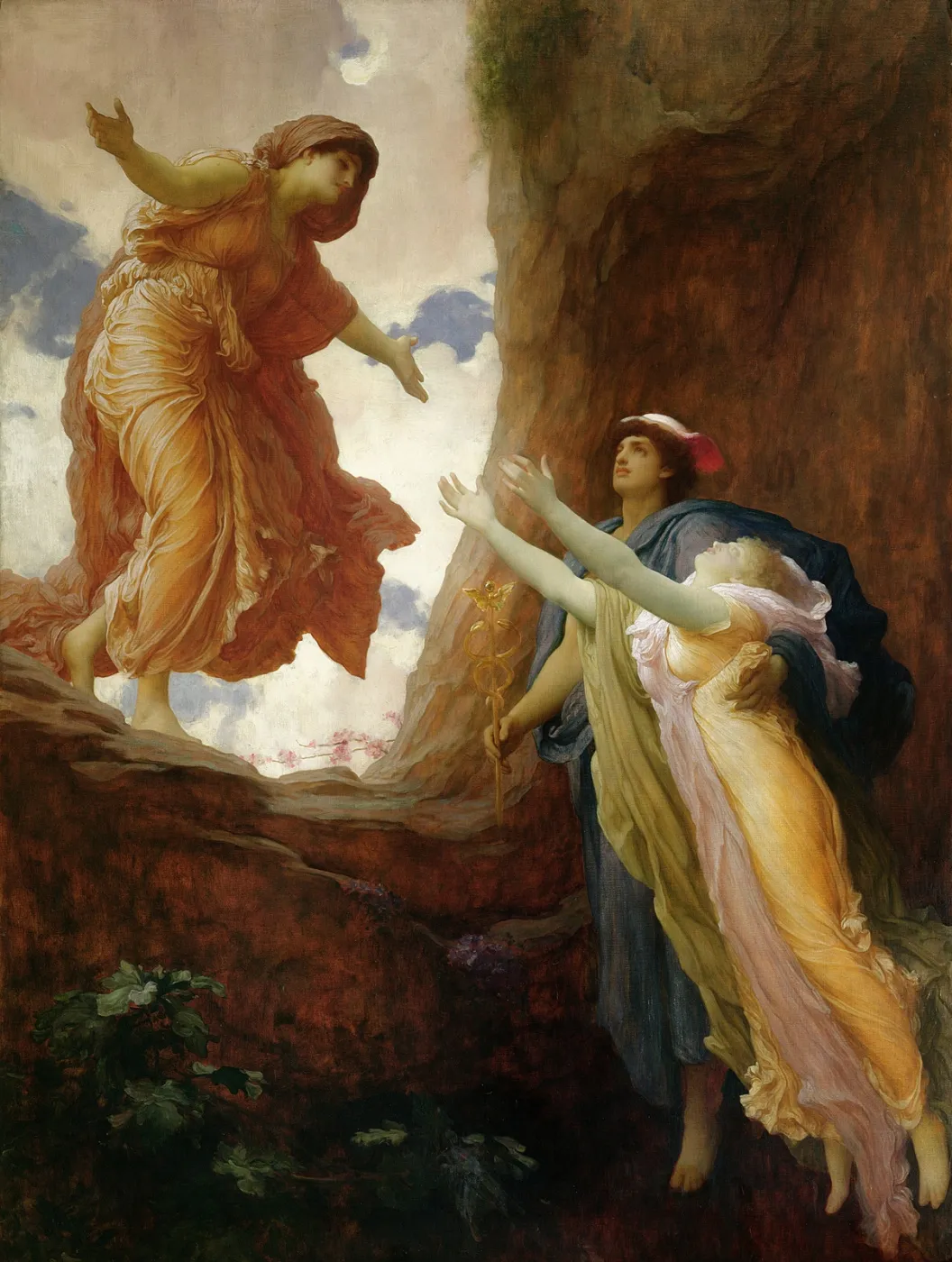
A young woman in a pale dress floats up out of a dark rocky opening towards her mother, who reaches out to her.
The Return of Persephone · Frederic Leighton, 1891 · Leeds Art Gallery

V. The returnDemeter saw the chariot coming and ran.

Persephone jumped down and ran too, and threw her arms around her mother’s neck.

The return

Hermes drove the chariot up to Eleusis. Demeter saw it coming and ran, the Hymn says, like one of Dionysos’ wild dancers running down a wooded mountain. Persephone jumped down and ran too, and threw her arms around her mother’s neck.

Then came the question a mother asks first: did you eat anything down there?

She had: one seed. So a deal was made. Persephone would spend a third of the year below, and the rest above, with her mother and the gods. And when the earth was full of spring flowers, Demeter told her, she would come up again, “to be a wonder for gods and mortal men.”

Homeric Hymn to Demeter 384–389, 393–413 (the question), 398–403 and 445–447 (the third of the year, the spring). Quoted from Evelyn-White, 1914.

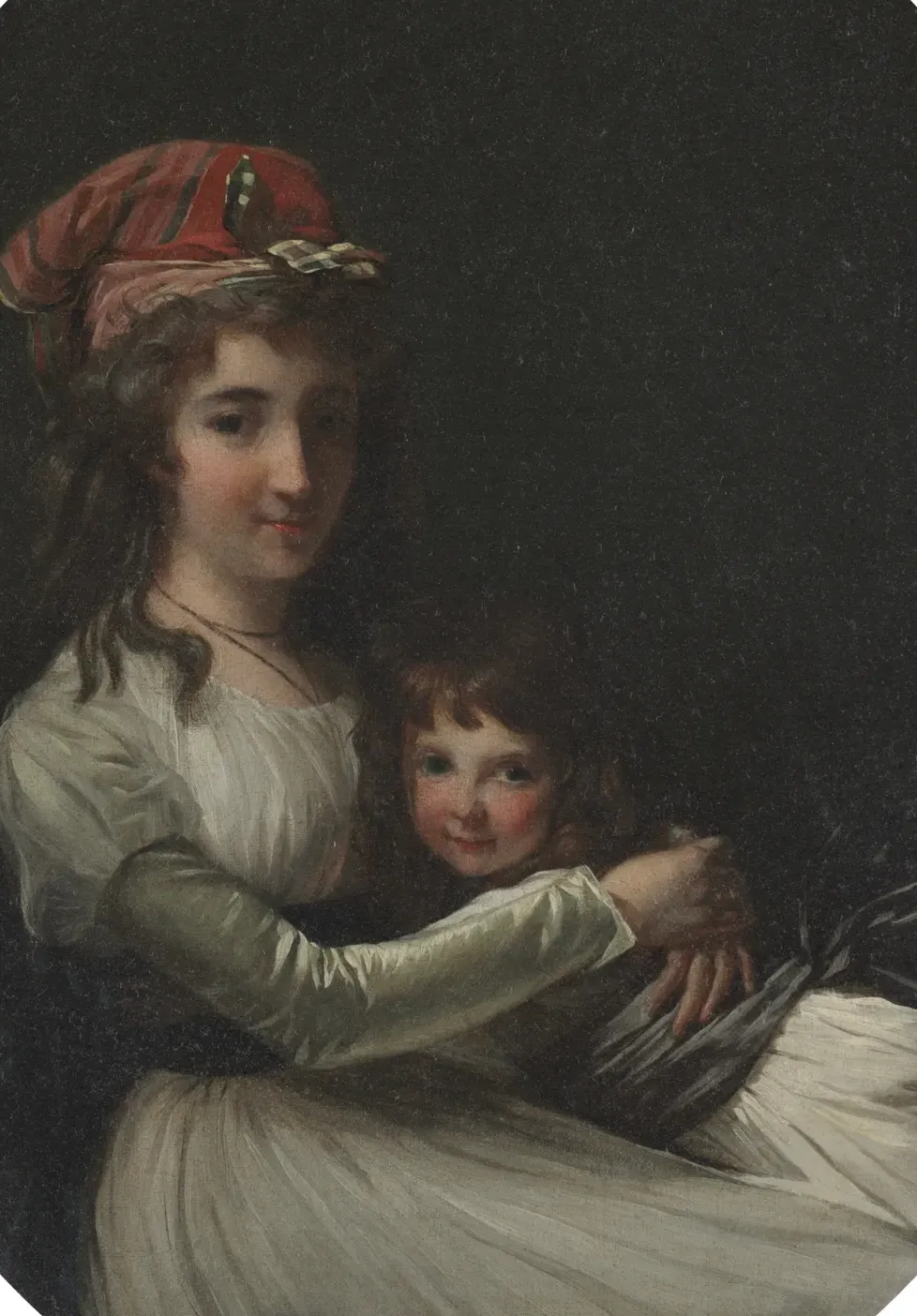
A young mother in a white dress holds her small daughter close on her lap.
Portrait of a Mother and Daughter · Henri-Pierre Danloux, c. 1794–95 · Cleveland Museum of Art 2008.286

VI. The friend with the torchMother and daughter held each other for a long time.

Hekate came to meet them too. From that day, she was Persephone’s companion.

The friend with the torch

Mother and daughter held each other for a long time, and Persephone told her everything. Hekate came to meet them too. She held Persephone again and again, and from that day, the Hymn says, she was her companion. Then Demeter let the fields grow, and the whole wide earth filled with leaves and flowers. Before she went home to the gods, she taught the people of Eleusis her rites, and asked them to keep them secret.

Look at how the deal is made. The way back up is agreed before she goes down again. She has a date to come home, and a friend with a torch who goes with her.

Homeric Hymn to Demeter 434–440, 470–479.

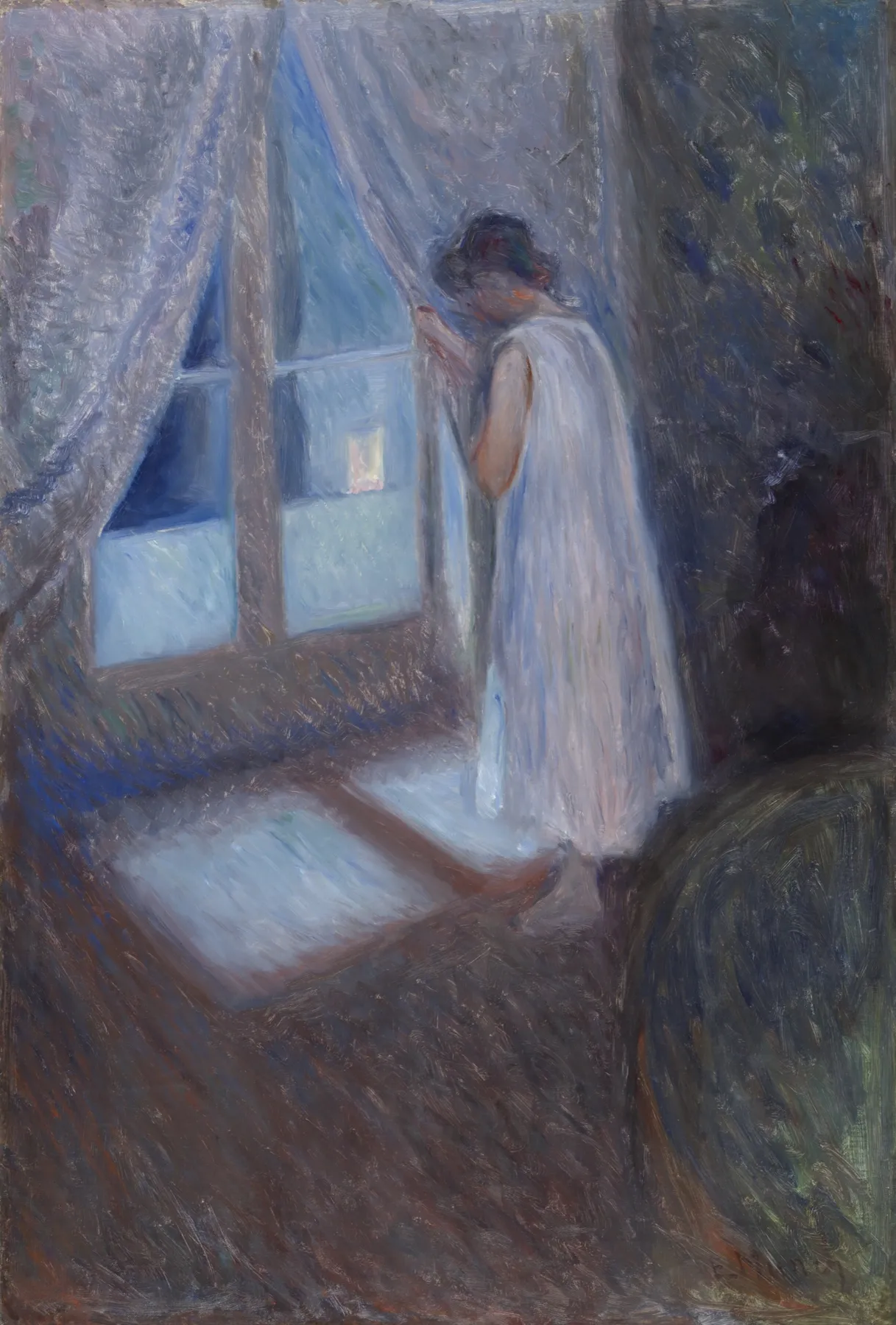
A girl in a white nightdress stands at a window at night, looking out into the blue dark.
The Girl by the Window · Edvard Munch, 1893 · Art Institute of Chicago 2000.50

VII. Below, againOn 31 October, at Samhain, the dark half of the year begins.

Persephone is going down again. She’ll be back in spring.

Below, again

The Hymn gives her a third of the year below. The witches’ calendar draws the year in two halves, and on 31 October, at Samhain, the dark half begins. Samhain is the Irish word for November. In the north the nights are long now, and Persephone is going down again. She’ll be back in spring. In the south it’s the other way round, and spring is already here.

The dark half of the year: the modern witches’ calendar, northern dates (Ronald Hutton, The Stations of the Sun, 1996).

Try this

When the nights get long, put one small summer thing in the pocket of your winter coat. A shell, a ticket, a pressed flower. You’ll find it again on the first warm day.

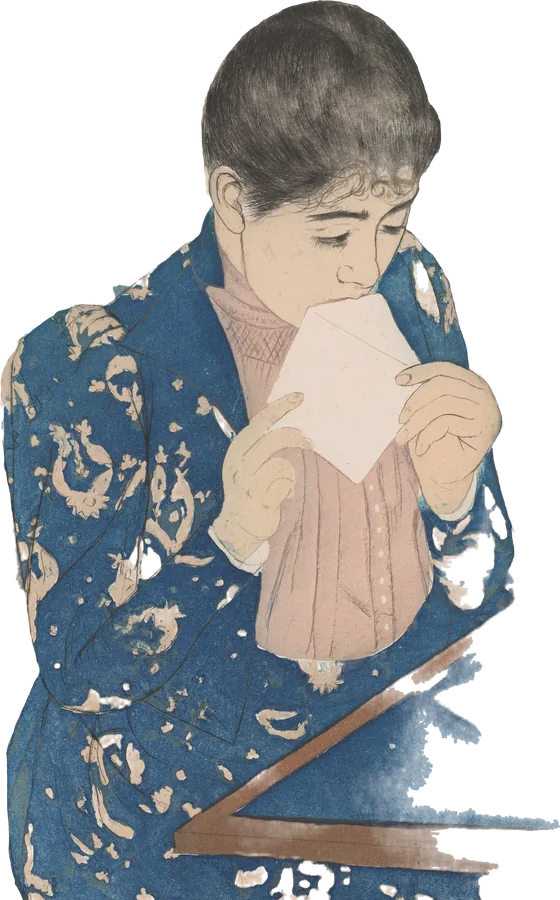
A woman in a blue patterned robe holds an envelope to her lips.

The paintings

  1. Berthe Morisot, Reading, 1873. Cleveland Museum of Art 1950.89.
  2. Gerrit van Honthorst, A Boy Blowing on a Firebrand, 1621–22. Art Institute of Chicago 2018.135.
  3. Jules Breton, The Tired Gleaner, 1880. Cleveland Museum of Art 1915.721.
  4. Dante Gabriel Rossetti, Proserpine, 1874. Tate N05064.
  5. Frederic Leighton, The Return of Persephone, 1891. Leeds Art Gallery.
  6. Henri-Pierre Danloux, Portrait of a Mother and Daughter, c. 1794–95. Cleveland Museum of Art 2008.286.
  7. Edvard Munch, The Girl by the Window, 1893. Art Institute of Chicago 2000.50.
  8. At the end: Mary Cassatt, The Letter, 1890–91. Art Institute of Chicago 1932.1282.

Read on

All stories · short myths, A to Z